How to Track Calories Without a Food Scale
No kitchen scale? You can still log food with package servings, measuring cups, recipe portions and a few honest notes. Here is how to do it well.
You don't need a food scale to keep a useful food log. Package labels, measuring cups, recipe portions and a few notes to yourself get you most of the way there. What you get is an estimate, and that's fine, as long as you know it's an estimate.
If an exact amount matters for a medical condition or treatment plan, ask your clinician or dietitian which method to use. For everyone else, here's how to make the no-scale version good enough.
Start with what's already on the package
Before you guess anything, see what information you already have: the label, the number of pieces in the box, the recipe, how many plates the pot made, the cup you always use.
One thing trips people up constantly. Label calories are per serving, and a serving isn't what you ate. The FDA explains that a serving size is a reference amount, not a recommendation. So check how many servings you actually had.
Five ways to log without a scale
Use the package fractions
Four equal servings in the tub and you ate a quarter? That's one serving. Half the package? Half the total. This works for evenly divided foods. A half-eaten bag of trail mix won't contain exactly half of each ingredient, so be a bit looser there.
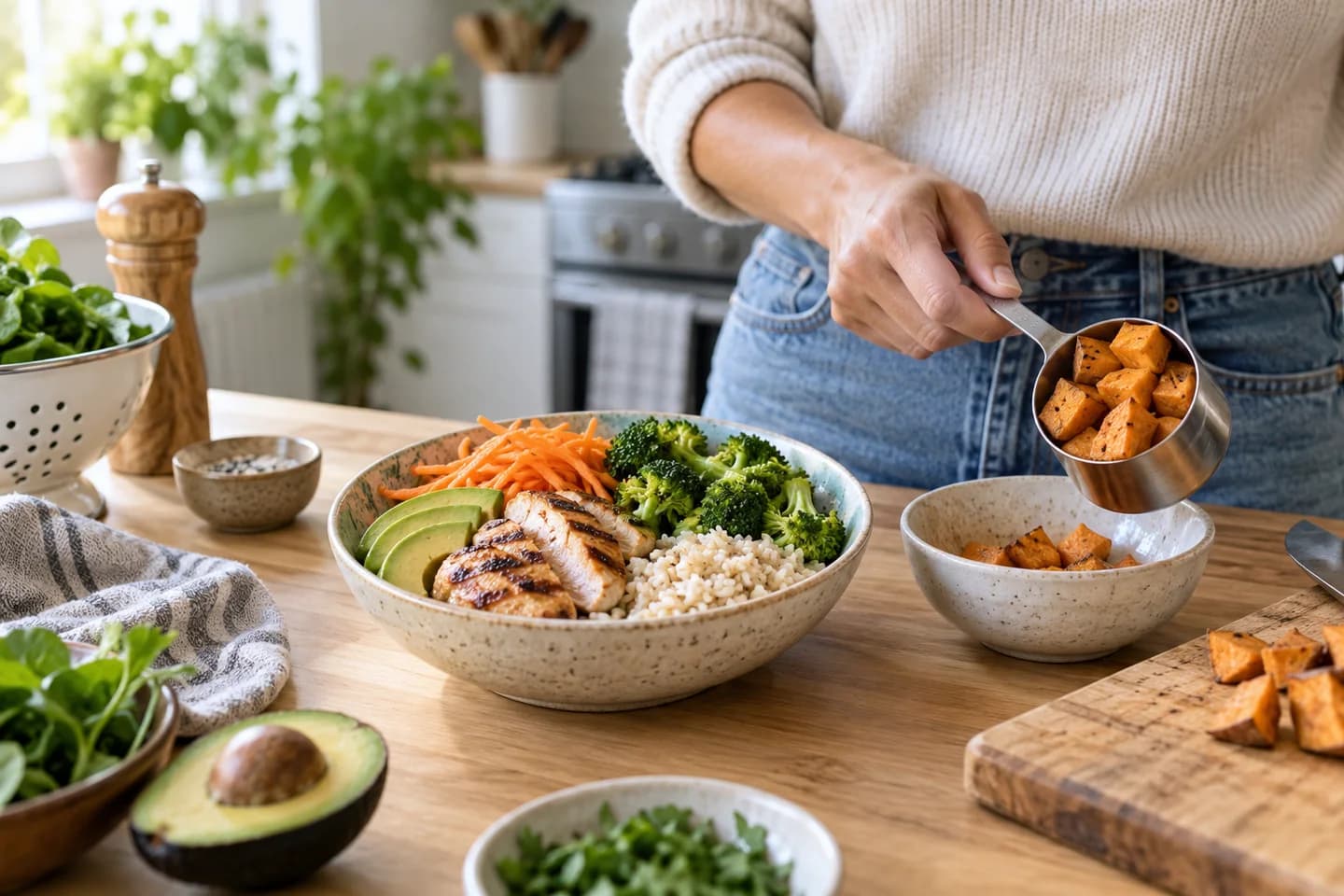
Measure with a cup or spoon
Use the same cup every time, and match the entry to that measure. A cup of chopped vegetables, a cup of packed rice and a cup of milk are very different things. Don't convert cups to grams unless you have a source for that specific food.
Reuse a familiar serving
Your usual bowl and serving spoon are handy for consistency. They don't tell you the calories on their own, though, so treat them as a reference you can repeat, not a standard.
Write the recipe down once
For something you cook a lot, add up the ingredients and note how many portions it makes. If your plate was bigger or smaller than the rest, say so. Redo the math when you change the oil, add cheese or stretch it to another serving. Our recipe and meal calculation guide works through the same approach.
Take a photo as a memory aid
A photo helps you remember the plate when you log later. It can't see the oil in the pan or what's inside a curry, so review the food names and portion rather than treating it as a measurement. Our photo calorie-counting guide has a step-by-step check.
Two quick examples
Say a label lists 200 kcal per serving and you had one and a half servings. That's 200 × 1.5 = 300 kcal. Add a sauce at 40 kcal for the amount you used and the meal is 340 kcal.
Or a homemade dish whose recipe adds up to 1,200 kcal, split into four portions as evenly as you can manage: 1,200 ÷ 4 = 300 kcal each. If your plate was visibly bigger, log it as bigger instead of calling it the same.
Where estimates go wrong
Mostly in the small stuff. Before you finish a log, run through a quick list:
- Cooking oil, butter, dressing and nut butter, which are hard to judge by eye.
- Drinks and extras, like milk in coffee, toppings and little snacks.
- Serving count: the label calories may cover one serving, not the whole container.
- Soups and curries, where a ladle holds different amounts of solids and liquid each time.
No label? The USDA FoodData Central search is a good place to look up generic foods. Pick the entry that matches how the food was prepared, and use the product's own label instead whenever you have one.
When a scale is worth borrowing
You can weigh things for a week or two without becoming a person who weighs everything. It's useful when you keep misjudging one food, when a recipe's portions vary a lot, or when you want to learn what your usual serving looks like. Weigh your regular bowl of rice once, remember the result, and put the scale away.
It's worth being honest about how far to trust visual estimates. A systematic review of food quantification aids found that accuracy varies across tools and foods. Mixed, irregular meals are the hardest.
And if counting is making you anxious, or it just doesn't feel good, it's okay to stop for a while and talk to a qualified health professional. A food log is optional, and it says nothing about your worth.
Questions about tracking without a scale
Can I count calories without weighing everything?
Yes. Use labels, package fractions, cups and recipe portions where they fit, and write down what the estimate was based on. Some meals will be fuzzier than others.
Are hand or plate portion tricks accurate?
They're repeatable, which is useful, but hands and plates vary and mixed foods are hard to compare by sight. Don't turn a palm-sized portion into an exact weight unless you've measured it yourself.
What about restaurant meals?
Use the restaurant's published nutrition for the exact dish if it has any. If not, note the main ingredients, sauces and a rough portion and call it approximate. We cover this in tracking calories when eating out.
Is a photo enough to know the calories?
No. It can support your log, but it can't reliably show recipe quantities or exact weight. That's true of any photo-based tracker, including the one we're building.
Keep it simple enough to repeat
Read the label for packaged food. Keep a short recipe note for the stuff you cook weekly. Describe unfamiliar meals honestly instead of claiming exact numbers. Our guide to keeping a logging habit shows how to make that routine stick. The calorie calculator estimates your daily needs, not the calories in a given meal, and you can read about why we're building BiteCal if you're curious where the photo-scan idea fits.