How to Track Calories When Eating Out
Restaurant meal, no nutrition info? Check the menu first, then break the plate into parts, estimate honestly and log it without stressing over the number.
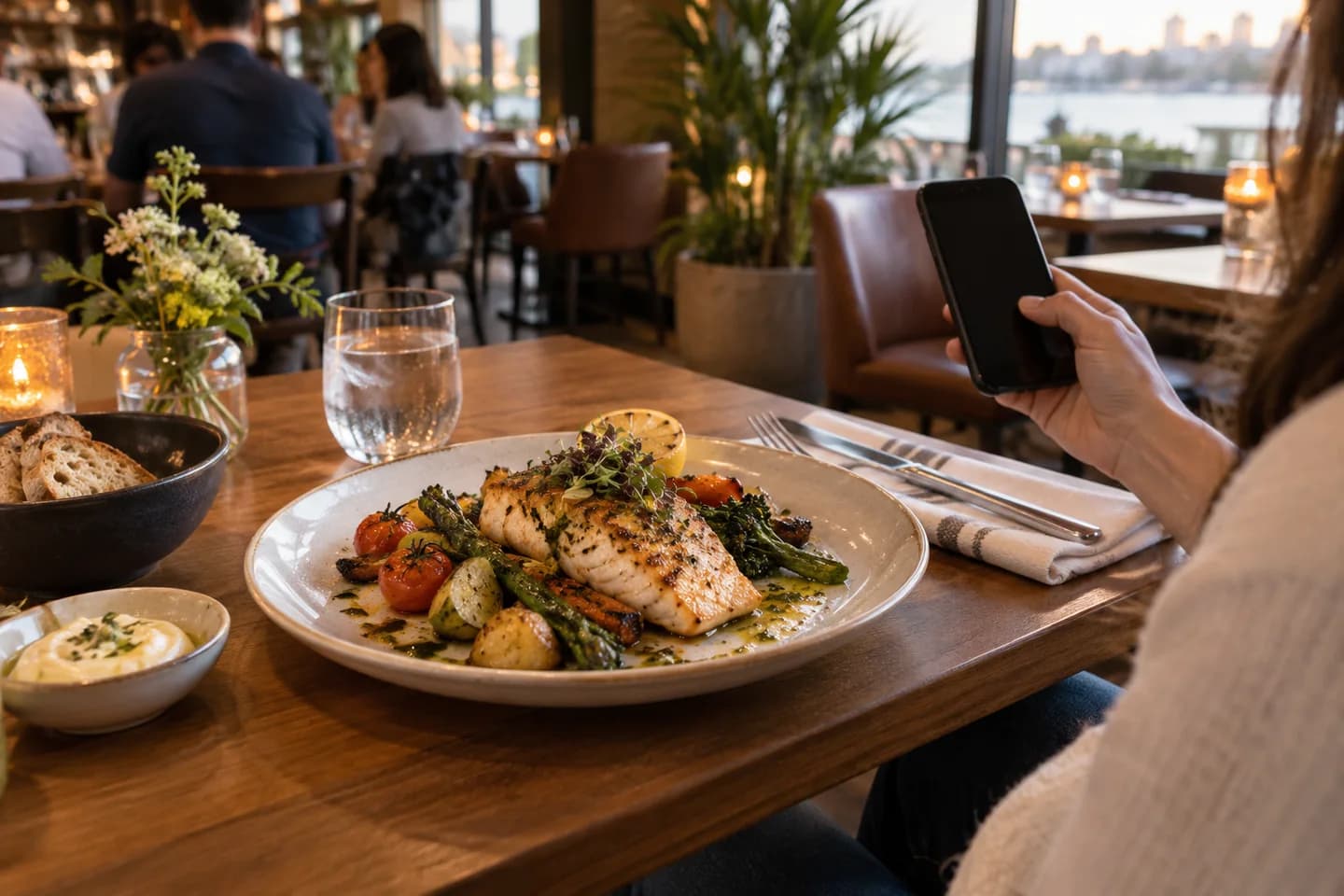
Eating out is where most food logs fall apart. No label, no recipe, a plate twice the size of what you'd cook at home. The good news is you don't need to be exact. You need to be honest about what you know and what you're guessing.
First, check whether the restaurant publishes nutrition for your dish. If it doesn't, write down the main parts of the plate, how it was cooked, the sauces, the drinks, and how much of it you actually ate.
Look for real numbers first
My order of preference: the restaurant's own nutrition data for your exact item and size, then its ingredient notes, then a tracker entry that closely matches the dish. If none of those work, estimate from the components and mark it approximate.
Whether you'll find numbers depends on where you live and where you eat. In the US, FDA menu-labeling rules cover certain chains with 20 or more locations, but not every restaurant. The FDA overview of menu labeling spells out the scope. Rules elsewhere differ.
A chain's published figure is a decent starting point when it matches what you ordered. A similar-sounding dish at the place down the street might use different oil, sauce and portion sizes.
Before you order
Read the full description, not just the dish name. The side, the size and the preparation all change the total, and a figure listed for a small portion won't describe a large one. Customizations count too: extra cheese, dressing on the side, a different side dish.
Decide how you'll log it. You can use the restaurant's figure if it fits, or plan to note what's on the plate when it arrives.
And you don't have to order based on a calorie count. This is for people who find logging useful. If you're at a birthday dinner, enjoy the dinner.
When the food arrives
Take a quick photo if it helps you remember. Mentally note the main food, the sides, the drink, any sauce. If an ingredient really matters for your record, you can ask, but there's no need to interrogate the waiter.
Log what you ate, not the whole plate by default. Shared the fries? Took half home? Say so. If you don't have a scale with you, which is most of the time, our guide to tracking calories without a food scale covers using familiar measures and notes.
When your app can scan a photo, it's a handy way to track calories with AI at the table, but it still can't see cooking oil or exact weight. Our photo calorie-counting guide explains how to check what it suggests.
Estimating a dish with no nutrition info
Break the plate into parts: the main item, the starch, vegetables, sauce, toppings, drink. Then find entries that match the ingredient and how it was cooked. Baked and fried versions of the same food aren't interchangeable. And count things once: an entry for a complete dish may already include its sauce and side.
Here's how the math works if the menu does list things. An entree at 480 kcal, a side at 160 kcal and a drink at 90 kcal come to 480 + 160 + 90 = 730 kcal. If you only ate half the side or swapped the drink, adjust and note it instead of recording 730 anyway.
Log it and move on
Pick the closest entry, adjust the portion, and keep a note on where the number came from: the menu, a package, or your eyeballing. Skip the habit of adding a fixed "restaurant buffer" to every meal. There's no universal correction that works across cuisines and venues, and it just makes your log less honest.
Forgot a detail? Write down what you remember and keep going. One rough meal is still one entry in a bigger record. Our guide to a consistent logging habit helps with days like this, and the accuracy guide explains why identifying a food and estimating its portion are two different problems. If you're wondering why we're building BiteCal around this, here's the thinking.
Questions about restaurant calories
Can I trust the calories listed on a menu?
They're the best reference you'll get when they describe the item, size and options you ordered. Kitchens still vary a bit, and menu-labeling rules differ by country and restaurant type.
How do I log a meal with no nutrition info?
List the main components, how it was cooked, sides, sauces and drinks, pick the closest entries and call the total approximate. Don't assume you know the hidden ingredients.
What if I can't remember everything I ate?
Log what you do know, such as the dish, a rough portion and the visible sides. A partial honest note beats an invented recipe.
Do I have to skip restaurants while tracking?
No. Tracking is optional, and one imperfect estimate doesn't ruin anything. If counting calories feels stressful or doesn't suit you, it's fine to pause and talk with a registered dietitian or your doctor.