How Accurate Are AI Calorie Trackers? How to Check for Yourself
An AI calorie tracker can name your meal right and still miss the calories. Here is how to test an estimate against your own recipe.
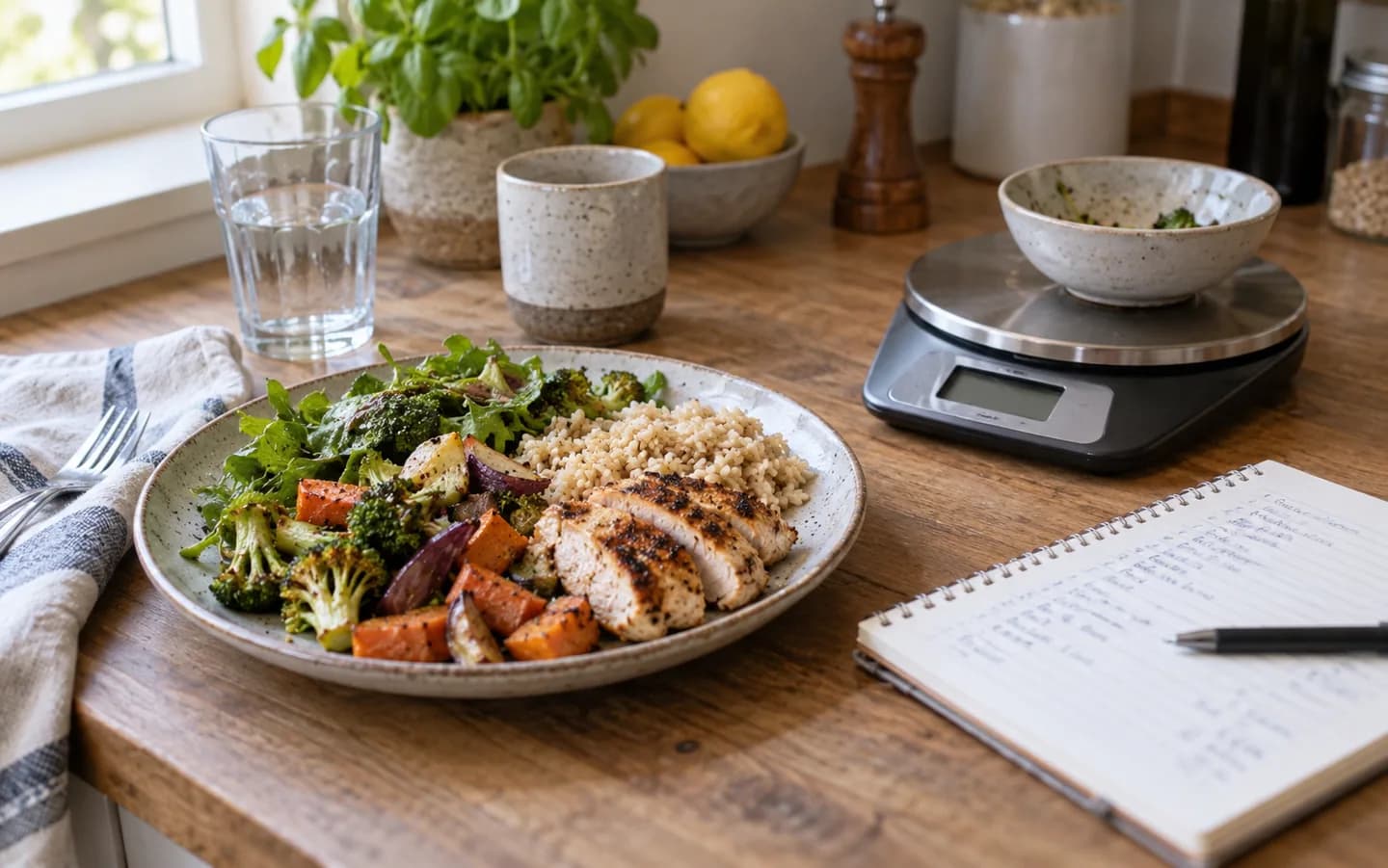
A tracker can look at your plate, say “pasta”, and still be 150 kcal out. Recognising the food is one problem. Guessing its weight is another. Knowing what went into the sauce is a third. So when someone quotes an accuracy figure, the first question is what it actually measures.
This isn't a BiteCal study. The app isn't published yet and we have no accuracy percentage to show you. What we can offer is a method for checking any AI calorie tracker against your own cooking.
Naming the food is not the same as counting it
Spotting pasta tells you nothing about the oil in the sauce, the weight on the plate, or whether you finished it. A percentage for “correct food names” says little about calories.
Manual logging isn't perfect either. The National Cancer Institute dietary-assessment primer covers measurement error and how the act of recording can change what people eat. Even a weighed recipe is a good reference, not a lab result.
How to build a fair test at home
Cook something you can weigh. Add up the real labels for each ingredient, oil and sauces included, and write the total down before you scan anything. That order matters, because otherwise you'll nudge your reference toward the app's answer without meaning to.
Then work out your share. Weigh the finished pot and your serving, or split it into genuinely equal portions. Scan the plate, save the first estimate, and only then make corrections. Keep both numbers, because the gap between the raw scan and the corrected one is useful on its own.
- Meal name and reference calories
- First estimate and corrected estimate
- How you measured the portion
- Why you changed anything (light, deep bowl, hidden filling)
A handful of these will show you where your usual meals go wrong. They won't amount to a benchmark of the product.
Working out the error
Say your recipe reference is 500 kcal and the photo estimate is 420. Signed error is 420 − 500 = −80 kcal, an underestimate. As a percentage that's |420 − 500| ÷ 500 × 100 = 16%.
Take a second meal: reference 400, estimate 480. That's +80 kcal, or 20%. Average the signed errors and you get zero, which hides two real misses. Mean absolute error is (80 + 80) ÷ 2 = 80 kcal, and mean absolute percentage error is (16 + 20) ÷ 2 = 18%.
Where mismatches come from
The wrong food
Fried versus grilled, sweetened versus plain, one brand versus another. If the entry is wrong, changing the amount won't save it.
The wrong units
Dry versus cooked weight, grams versus ounces, one serving versus the whole package. Errors that grow with portion size usually start here.
Things you can't see
Stuffed parathas, casseroles and creamy sauces hide their fat. A photo can't tell whether your serving had more filling than the recipe assumed.
A shaky reference
Old label versions, leftovers, and a guessed batch yield all weaken your yardstick. If the reference is fuzzy, so is any accuracy claim built on it.
Picking the right method for the meal
Packaged food: read the current label and log what you ate. Repeat home cooking: document the recipe once and reuse it. An unfamiliar restaurant dish stays an estimate however clear the photo is. The FDA nutrition-label guide explains why serving amounts matter so much.
Our photo calorie-counting walkthrough covers the day-to-day routine. And if you need more precision than an estimate can give, talk to a registered dietitian or clinician instead of picking an app by its marketing number.
Reading accuracy claims
Does one good scan prove a tracker is accurate?
No. A fair evaluation covers many cuisines, portion sizes and awkward meals. Your own comparisons can expose problems with your food, but they don't prove how the tool performs for everyone.
Can I compare one app's percentage with another's?
Only if they measure the same thing. Ask whether it's food recognition or calorie error, first scan or corrected result, and how the reference was made and the meals chosen.
Why don't the macros and calories add up exactly?
Check units and portions first. Rounded label values won't always rebuild the printed calories when you multiply by the standard energy factors. Don't edit numbers just to make the sums match.
Asking us about an estimate
If you want to raise a question, tell us the food, the portion, the estimate you saw and any label or recipe maths you did. Leave out unrelated personal details. You can contact the team, read about BiteCal, or see why we're building a photo-first tracker.